 Sign In

Professional Cable Ties & Wire Management Solutions
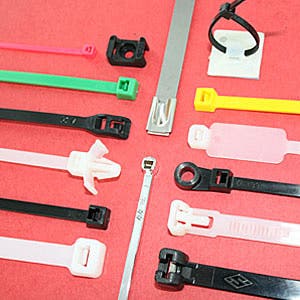
ElecDirect offers a wide selection of cable ties, zip ties, tie wraps, wire ties, and cable tie accessories for electrical, industrial, automotive, OEM, and commercial applications. Our cable ties are available in multiple sizes, lengths, tensile strengths, colors, and materials to help you bundle, secure, organize, and identify wires, cables, hoses, and components. Whether you need nylon cable ties for everyday cable management, heavy-duty zip ties for industrial applications, stainless steel cable ties for harsh environments, or specialty cable ties for unique requirements, ElecDirect has the right solution for the job.
- Common Cable Tie Applications Cable ties are widely used to bundle, secure, and organize cables, wires, hoses, and components across electrical, industrial, automotive, commercial, and residential applications.
- • Electrical Wiring: Organize and secure wires and cables in electrical systems.
- • Control Panels: Route and manage wiring inside enclosures and cabinets.
- • Wire Harnesses: Bundle wires during manufacturing and assembly.
- • Industrial Equipment: Secure cables and hoses on machinery.
- • Automotive: Fasten wiring harnesses and components in vehicles.
- • Network & Data Cabling: Keep communication and low-voltage cables organized.
- • HVAC Systems: Manage wiring in heating and cooling equipment.
- • Construction: Secure temporary and permanent wiring on job sites.
- • OEM Manufacturing: Organize wires and components during production.
- • Maintenance & Repair: Provide fast, reliable cable management.
- • Home & Office: Organize cords, cables, and general-purpose items.
- What Are Cable Ties & How Do They Work? Cable ties, also known as zip ties, wire ties, and tie wraps, are fasteners used to bundle, organize, and secure wires, cables, and components. They are widely used in electrical, industrial, automotive, OEM, and maintenance applications.
- • Nylon Cable Ties: Lightweight and versatile for everyday cable management.
- • Stainless Steel Cable Ties: High-strength, corrosion-resistant ties for harsh environments.
- • Metal Tooth Cable Ties: Nylon ties with a metal locking tab for added holding power.
- • Specialty Cable Ties: Designed for mounting, identification, detection, and specific applications.
- How Cable Ties Work Cable ties use a self-locking mechanism that tightens around a bundle and holds it securely in place.
- • Wrap: Place the tie around the cables or components.
- • Insert: Feed the tail through the locking head.
- • Tighten: Pull until the bundle is secure.
- • Trim: Cut excess tail for a clean finish.
Choose the right cable tie based on bundle diameter, tensile strength, temperature range, and environmental conditions.
- How to Choose the Right Cable Tie Selecting the right cable tie depends on bundle size, strength requirements, and environmental conditions.
- • Tensile Strength: Choose a tie strong enough for the weight and size of the bundle.
- • Bundle Diameter: Ensure the tie is long enough to wrap securely around the cables.
- • Material: Nylon is ideal for general use, while stainless steel is best for harsh or corrosive environments.
- • Temperature Rating: Select a tie designed for the installation's operating temperatures.
- • Indoor vs. Outdoor: Use UV-resistant cable ties for outdoor applications.
- • Certifications: Verify required approvals such as UL, CSA, or Mil-Spec.
- • Special Features: Consider mounting, color-coding, metal-detectable, or high-temperature options.
- What Is Cable Tie Tensile Strength? Cable tie tensile strength is the maximum pulling force a cable tie can withstand before breaking. Higher tensile strength ratings are designed for larger, heavier cable bundles. Cable ties are available in a range of strengths, from light-duty 18 lb ties to heavy-duty 250 lb ties, allowing you to match the tie to your application.
- Nylon vs. Stainless Steel Cable Ties
- • Nylon Cable Ties: Cost-effective, lightweight, and ideal for general-purpose cable management.
- • Stainless Steel Cable Ties: High-strength, corrosion-resistant, and suitable for extreme temperatures and demanding environments.
- Colored Cable Ties: Simple Color Coding for Easy Identification
Colored cable ties help organize, identify, and troubleshoot cable bundles quickly. While there is no universal color standard, many industries use common color-coding practices to improve cable management and safety.
- Red: Power cables, live circuits, or high-voltage applications.
- Blue: Data, network, and communication cables.
- Green: Grounding wires and environmental systems.
- Yellow: Caution, temporary circuits, or sensitive systems.
- Orange: Warning circuits and high-voltage applications.
- Black: General-purpose use and UV-resistant outdoor installations.
- White/Natural: General indoor cable management and labeling.


 live chat